This section is general, industry information on kitchen renovations to help with your research. It doesn't necessarily represent our views.
Kitchen Layout for Your Home: Island, U-Shape, L-Shape & Galley designs
Choosing a Kitchen Layout That Actually Works
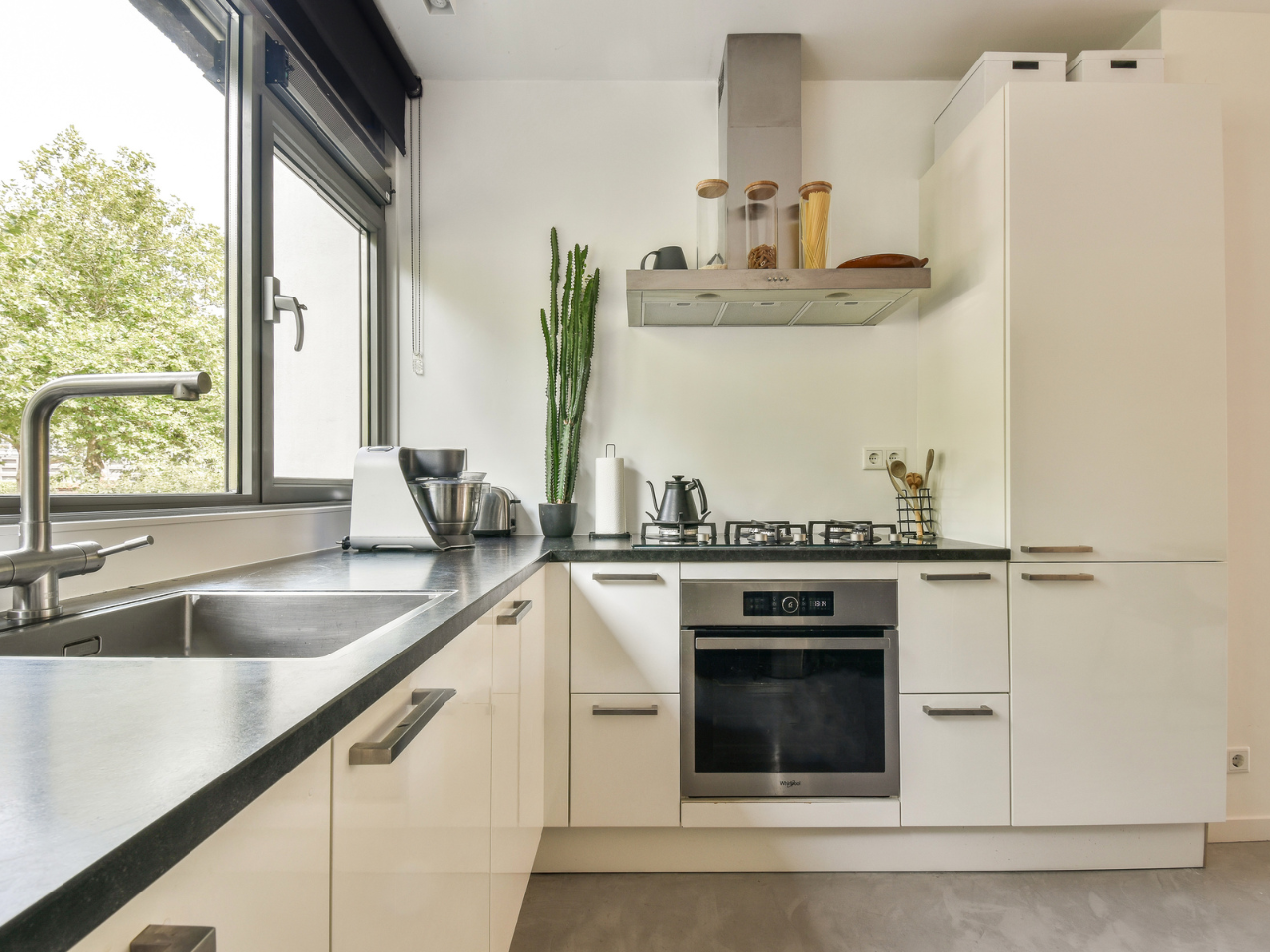
Choosing the right kitchen layout is one of the most important decisions you’ll make when designing or renovating your home. Many homeowners jump straight to the idea of island kitchen design, but it’s the underlying layout and how an island is integrated into it, that ultimately determines how functional the kitchen feels day to day. A well-planned kitchen layout supports natural movement, reduces unnecessary steps, and allows features such as an island to enhance workflow rather than interrupt it, making everyday tasks feel effortless instead of cramped or chaotic.
The challenge is that no single layout works for every home. The ideal layout depends on how much kitchen space you have, how the room connects to surrounding areas, and how the kitchen is used, whether that’s for quick weekday meals, serious cooking, or entertaining family and friends. This is why island kitchen design has become so popular, offering flexibility and additional workspace, but it’s not always the right solution for every layout.
Understanding how different layouts function within a home helps you move beyond trends and make choices that genuinely improve the way your kitchen works. Before committing to any design, it’s worth stepping back and looking at how layout affects flow, efficiency, and long-term usability.
What Really Defines the Right Kitchen Layout for Your Home
The right kitchen layout isn’t defined by appearance alone; it’s defined by how well the space supports kitchen work. Every functional kitchen relies on efficient relationships between key zones, particularly the sink, stove, and food preparation areas. When these elements are positioned thoughtfully, the kitchen feels intuitive to use, even during busy moments.
One of the most useful planning principles is the kitchen triangle, which focuses on reducing distance and obstacles between the sink, stove, and refrigerator. While modern layouts don’t always follow this rule rigidly, the concept still highlights the importance of smooth movement and clear work zones. Poor layouts force you to cross the room repeatedly or work around bottlenecks, which quickly becomes frustrating.
Your home itself also plays a major role. Existing plumbing, electrical points, and structural walls often influence what’s possible, especially during a kitchen renovation. In some cases, adjusting expectations leads to a better outcome than forcing a layout that doesn’t suit the space. The goal isn’t to choose the most popular design, but to create an ideal layout that feels natural within your home and supports how you actually live.
Why Island Kitchen Design Is Often the First Choice
Why should you consider an island kitchen for your home? An island kitchen design has become a defining feature of modern homes, largely because of how versatile it is. An island can serve as a preparation area, casual dining space, storage solution, and social hub all at once. In open-plan homes, it also helps visually anchor the kitchen while maintaining a connection to living and dining areas.
From a functional perspective, an island adds valuable countertop space and allows multiple people to work in the kitchen without getting in each other’s way. It can also improve workflow by separating preparation zones from cooking zones, making the kitchen feel more organised and efficient. For many households, this flexibility is what makes an island kitchen so appealing.
However, successful island kitchen design depends heavily on proportions. Without enough clearance around the island, movement becomes restricted and the layout quickly feels crowded. This is why islands work best when they’re integrated into the right kitchen design layout, rather than added as an afterthought. When planned correctly, an island enhances both usability and comfort, but when forced into an unsuitable kitchen space, it can compromise the overall functionality of the room.
Island Kitchen Layout Options
An island kitchen works best when it’s integrated into a layout that supports both movement and kitchen work zones. While islands are often associated with large, open spaces, their success depends less on size and more on how the surrounding layout is organised. The relationship between the island, primary work areas, and walkways determines whether the kitchen feels balanced or obstructed. Below are three of the most effective kitchen layouts where an island can be incorporated successfully.
L-Shape Kitchen Layout with an Island
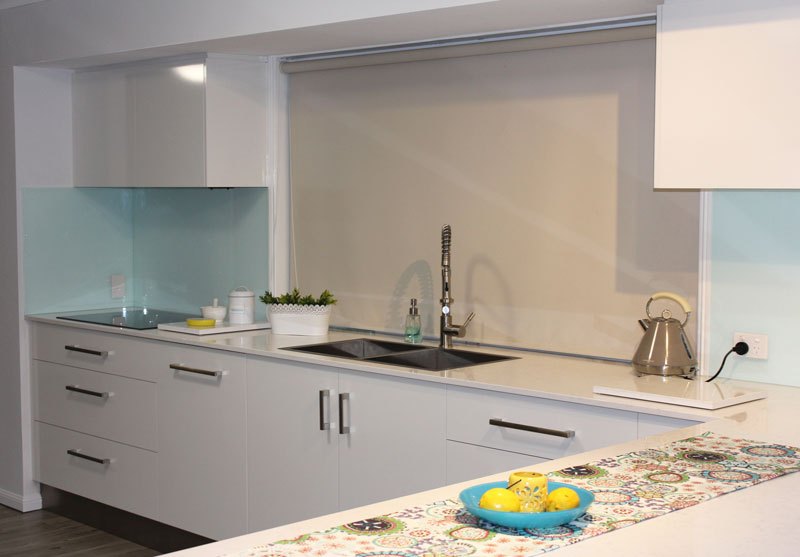
An L-shape kitchen paired with an island is one of the most flexible and widely used combinations, particularly in open-plan homes. This is why L-shaped kitchens for your home are often chosen for layouts that need strong workflow without feeling closed in. The two adjoining walls naturally define the main kitchen workspace, while the island sits comfortably within the open area, providing additional bench space without interrupting traffic flow. This arrangement allows the sink, stove, and preparation areas to remain connected while still feeling open and accessible.
Because the L-shape kitchen leaves one side open, it creates a natural transition between the kitchen and adjacent living or dining areas. The island often becomes the focal point of the space, functioning as both a work surface and a social zone. When designed properly, this layout offers a strong balance between storage, efficiency, and visual openness, making it a popular choice for modern family homes
U-Shape Kitchen Layout with an Island
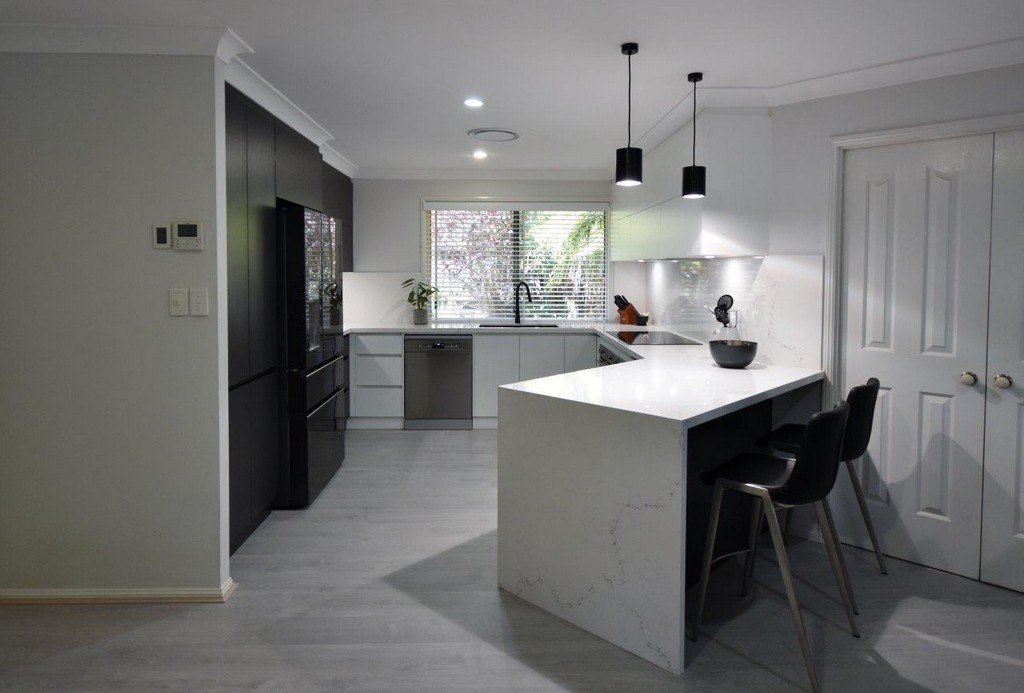
A U-shape kitchen layout with an island is best suited to larger kitchen spaces where efficiency and storage are top priorities. This is why U-shaped kitchen design is often used by home owners who want more clearly defined workspaces and generous benchspace. With cabinetry running along three sides, this layout creates a highly functional work zone that supports multiple tasks at once. The island sits at the centre, acting as a secondary workspace or preparation area while maintaining clear separation between different kitchen functions.
This configuration works particularly well for homeowners who cook frequently, as it minimises movement between key areas and keeps everything within easy reach. The challenge lies in maintaining enough clearance between the island and surrounding cabinets to prevent the space from feeling enclosed. When proportions are carefully planned, a U-shape kitchen with an island delivers exceptional functionality without sacrificing comfort or flow.
Galley Kitchen Layout with an Island
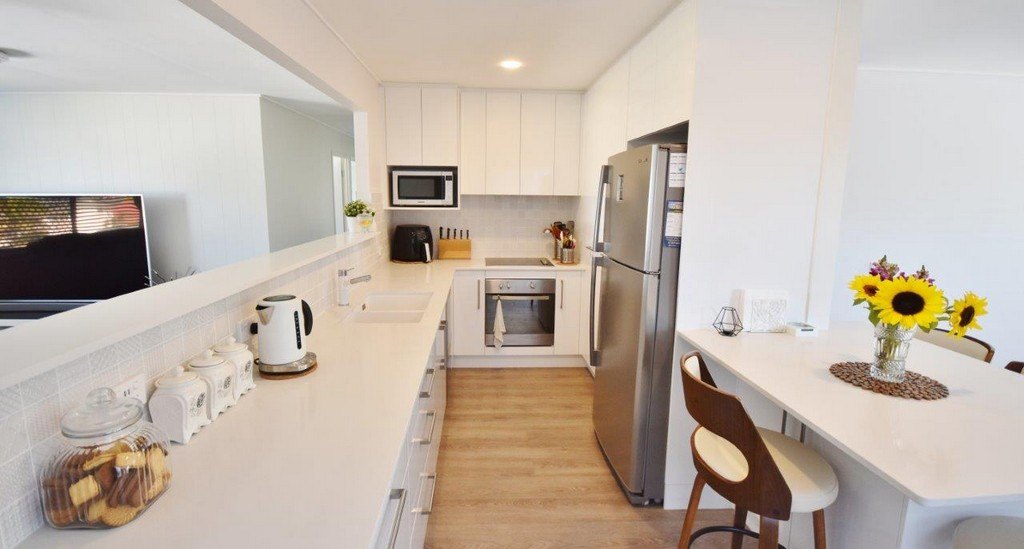
A galley kitchen with an island is less common, but when executed correctly, it can be surprisingly effective. In wider layouts, galley kitchens for your home can accommodate both parallel counters and a central island without restricting movement. In this configuration, the island often replaces one run of cabinetry or functions as a flexible prep station rather than a fixed block.
The strength of a galley kitchen lies in its efficiency, and adding an island can enhance that efficiency by creating additional workspace and storage. However, careful planning is essential to avoid crowding the kitchen work zones. When space allows, a galley layout with an island can deliver a streamlined, highly functional kitchen that feels intentional rather than forced.
When a Kitchen Layout Without an Island Is the Better Choice
While island kitchens are often seen as the gold standard, they are not always the most practical option. In smaller homes or compact kitchen spaces, adding an island can disrupt flow rather than improve it. Tight clearances around countertops and appliances quickly lead to congestion, turning what should be a functional kitchen into a difficult space to navigate.
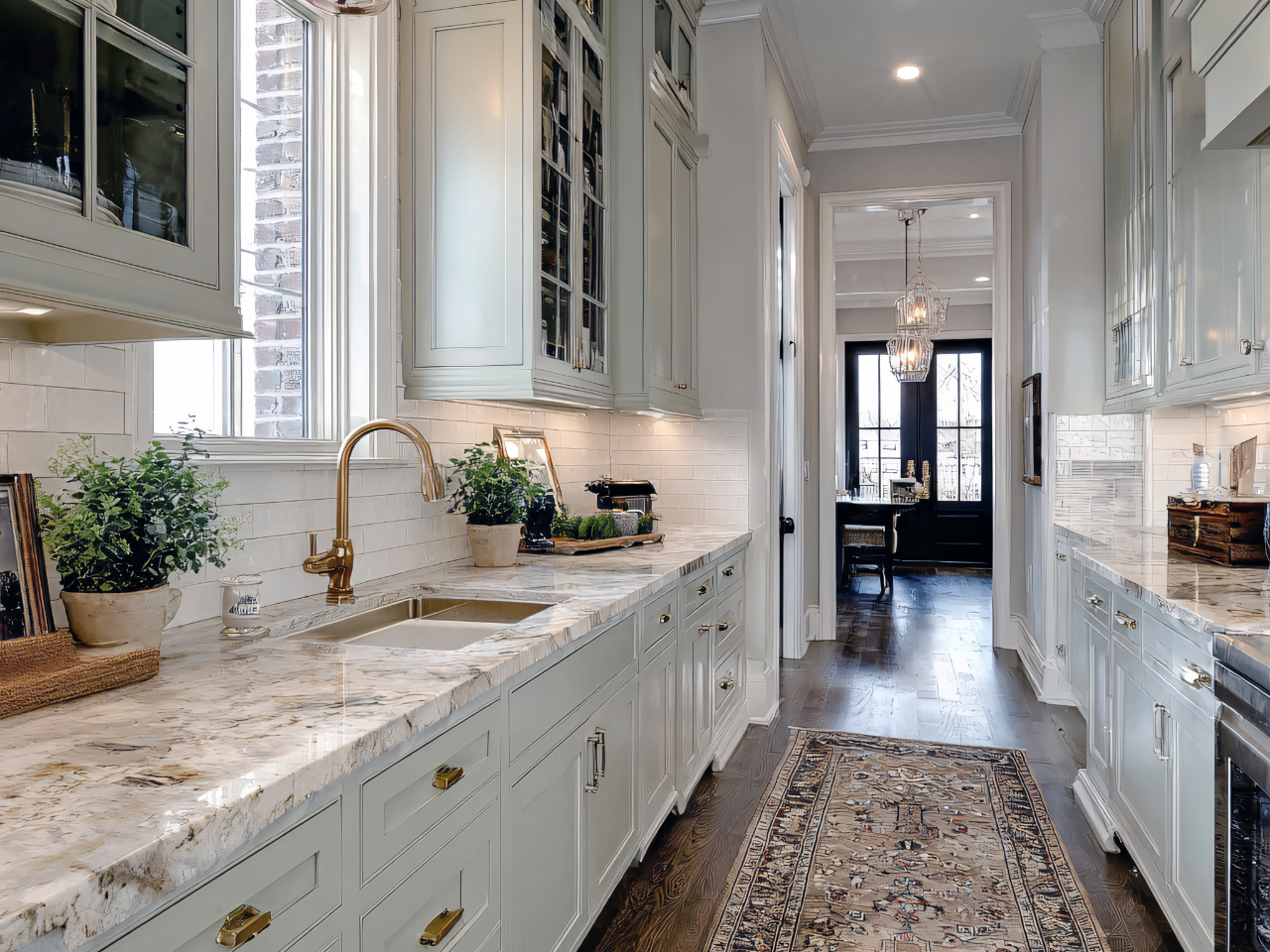
In some layouts, a streamlined approach works better. Galley kitchens, single-line kitchens for your home, and compact L-shape layouts can function exceptionally well without an island, particularly when storage and work zones are carefully planned. These designs often prioritise efficiency over flexibility, keeping the sink, stove, and preparation areas close together and reducing unnecessary movement.
Budget also plays a role. Including an island can increase costs through additional cabinetry, plumbing, and electrical work. In many cases, investing in better storage solutions, improved lighting, or high-quality finishes delivers more long-term value than forcing an island into a layout that doesn’t naturally support it.
Matching Kitchen Layouts to How You Live
The most successful kitchen layouts are shaped by lifestyle rather than trends. A household that cooks daily will value efficiency and clear work zones, while homes that prioritise entertaining may benefit from layouts that encourage interaction and open sightlines. Understanding how your kitchen will be used on a daily basis and applying kitchen design fundamentals such as flow, spacing, and zone planning is key to selecting the ideal layout.
Families often require layouts that balance durability with accessibility, allowing multiple people to use the kitchen at once without conflict. In contrast, smaller households or apartment living may benefit from more compact kitchen design layouts that maximise storage while minimising wasted space. Lighting, storage, and appliance placement all play a role in how functional the kitchen feels once it’s in use.
This is where the experience of interior designers becomes valuable. A well-designed kitchen layout considers not just how the space looks on paper, but how it performs over time. By aligning layout decisions with the realities of daily life, homeowners can create kitchens that remain comfortable, practical, and enjoyable long after the renovation is complete.
Designing a Kitchen Layout That Works Long-Term
Choosing the right kitchen layout for your home is ultimately about creating a space that supports how you live now and how you plan to live in the future. While trends come and go, a thoughtful layout remains functional regardless of changing styles or finishes. Whether your kitchen includes an island or follows a more compact design, the goal is to balance efficiency, comfort, and flow.
A well-planned kitchen design allows movement to feel natural, keeps essential work zones within easy reach, and makes the most of the available space. Taking the time to consider layout options carefully helps avoid costly changes later and ensures the kitchen continues to meet your needs behavioral and practical for years to come.
When in doubt, professional guidance can help translate ideas into a layout that truly works. With the right planning, your kitchen can become a space that feels intuitive, functional, and perfectly suited to your home. Please reach out to our team to get started on your kitchen design; enquire online or call us at (07) 3204 0399.
This section is general, industry information on kitchen renovations to help with your research. It doesn't necessarily represent our views.