This section is general, industry information on kitchen renovations to help with your research. It doesn't necessarily represent our views.
How Do You Care for Stainless Steel Benchtops?
Stainless steel is tough and hygienic, but don't treat it as bulletproof. That famous resistance to corrosion actually depends on a microscopic 'passive layer' on the surface.
Caring for your stainless steel benchtops is really about protecting that film. Use the wrong chemicals and you’ll strip that protection away; treat it right, and the material quality will hold up for a lifetime.
The Daily Routine: Always Follow the Grain
If you look closely at your kitchen worktops, you’ll see fine directional lines in the metal. This is the grain. For daily maintenance, the rule is absolute: always wipe in the direction of the grain.
If you wipe in circles or against the grain, you’re just shoving dust and dirt into those tiny grooves. Over time, that’s what makes the steel look dull and cloudy. To keep it in top condition, stick to this routine:
🧼 The Tools
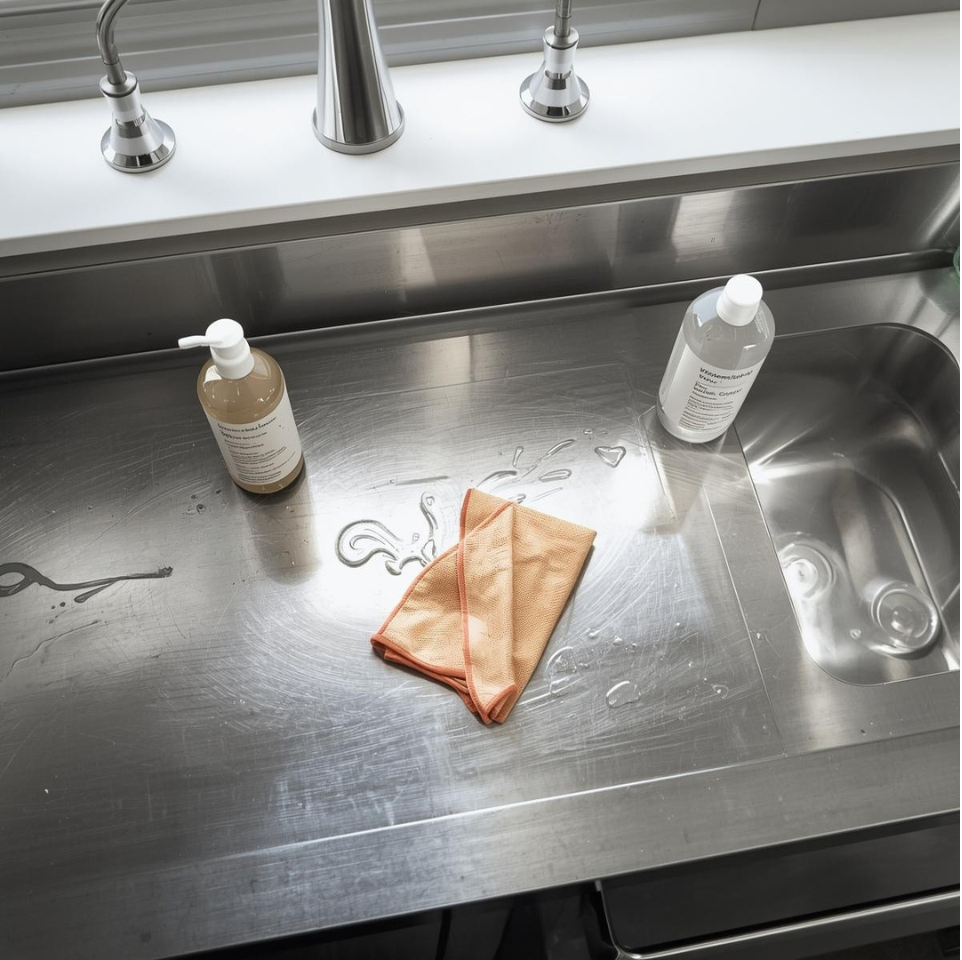
Use a soft microfibre cloth. Avoid paper towels, which can leave lint and streaks.
🧼 The Cleaner
Warm water mixed with a drop of mild dish soap is usually all you need.
🧼 The Finish
Always buff the surface dry with a separate, clean cloth. Leaving water to air-dry is the fastest way to develop hard water deposits and unsightly water spots.
The ‘Never’ List: Common Killers of Stainless Steel
To maintain the structural integrity and finish of your stainless steel worktops, you have to know what to keep out of your cabinets. Some of the most common household cleaners are actually silent killers for steel.
⚠️ Bleach & Chlorine
These are your biggest enemies. Chlorine eats through that 'passive layer' we mentioned, leading to permanent pitting in the steel. If you spill any, don't just wipe it, flood it with water immediately.
⚠️ Steel Wool & Silver Cleaners
Never use a wire brush or steel wool. They leave behind tiny carbon steel particles that will eventually contaminate the surface, causing the benchtop to look like it’s rusting out.
⚠️ Abrasive Powders
Gritty cleaners act like sandpaper on the surface finish. They will destroy the factory grain and leave a dull, hazy patch that is nearly impossible to buff out.
⚠️ Oven Cleaners
These are highly caustic. Even a single drip can permanently stain the metal, leaving a mark that sticks out like a sore thumb on an otherwise perfect bench.
Dealing with Worktop Woes
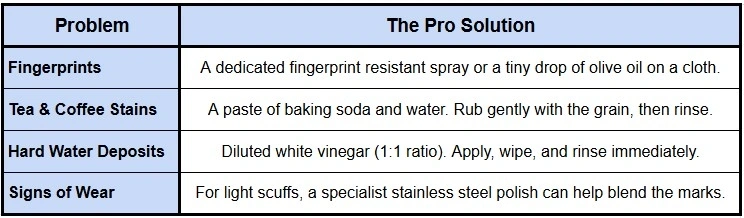
Even with a perfect routine, life happens. Here is how to handle stubborn stains without compromising material quality:
Restoring the Lustre: The Showroom Finish
If your benchtop is starting to look dull or cloudy, you’re likely just looking at a buildup of grime. To get that original shine back:
✨ The Olive Oil Trick
Buff a tiny drop of oil into the dry metal. It creates a temporary fingerprint resistant barrier and makes water bead off.
✨ Specialist Polishes
Use a non-abrasive stainless steel polish to enhance the surface finish and maintain its appearance and performance.
✨ Clean First
Never polish over grease. Always start with a clean, dry bench to avoid smears.
Scratches: The Inevitable ‘Patina’
In a busy kitchen, your benchtop is going to get scratched, there’s no way around it. But don't panic. Over time, those marks blend into a 'patina' that actually helps hide the wear and tear, giving the steel that classic, soft-brushed look.
🌟 The Fix: If a deep scratch stands out, you can gently blend it with a synthetic scouring pad.
💥 Crucial: Move only in the direction of the grain to avoid permanent scuffing.
FAQ: Quick Care Wins
❓ Can I put hot pans on it?
Yes, the steel won't warp or melt, but constant extreme heat can eventually cause 'heat tint', which is a slight brownish or blueish discolouration. It’s best to use a trivet for the heavy-duty stuff.
❓ Why is it rusting?
Usually, it’s just ‘tea staining’. This happens when salt in the air or harsh cleaners (like bleach) sit on the surface. It’s almost always a surface deposit, not the bench itself rusting.
❓ Is Windex okay?
Occasional use is fine for streaks, but avoid cleaners with ammonia or vinegar unless you rinse them off immediately to protect the passive layer.
The Verdict: Simple Care for Lifetime Quality
At the end of the day, looking after your benchtop is just about keeping that protective top layer healthy. Stick to mild soap and a microfibre cloth, and always wipe with the grain.
If you stay away from bleach and steel wool, your bench will stay looking sharp for decades without a hint of rust.
By clearing away dust and dirt daily and embracing the natural patina, your kitchen worktops will handle the chaos of a busy kitchen for a lifetime.
Ready to design your dream kitchen? Call our friendly Haddon Kitchens team on (07) 3204 0399 or complete our enquiry form today.
This section is general, industry information on kitchen renovations to help with your research. It doesn't necessarily represent our views.